
Coweta Projected and Actual Release Dates
A projected date is an estimate, scheduled point, maximum term marker, or review point used before custody ends. The actual date records when the person left one agency's custody. A transfer can create an actual release from Coweta County Jail without creating freedom in the community. The person may move to GDC, another county, federal custody, or immigration custody.
Pretrial detention at the Greison Trail jail is especially hard to reduce to one date. A bond can be posted, a court can change the order, or another hold can prevent release. Coweta P2C may label a date as “Expected release” when its release-date field holds a future date, but the county's accessible sources do not explain the calculation or guarantee it. A sentenced state offender follows a different timeline based on the sentence, maximum term, parole eligibility, Board action, and any applicable GDC credit.
Find a Coweta County Projected Release Date
The search should follow custody type, not just the person's name. Coweta County Jail, Coweta County Correctional Institution, the Georgia prison system, and federal custody each publish different records. Starting in the wrong portal may produce no match even when a valid record exists.
- Identify the facility, arresting agency, and whether the person is pretrial, serving a local sentence, or serving a state or federal sentence.
- For Coweta County Jail, check the Sheriff P2C inmate catalog for a visible release or expected-release label, then compare bond, court date, charge, and docket information.
- For a state offender, open GDC Find an Offender, accept its disclaimer, and search by name, GDC ID, or case number.
- Use active and inactive scope, sentence status, conviction county, and most recent institution to narrow the GDC result.
- Check the parole board TPM lookup only for parole-review timing, then use the parolee database after an actual parole release.
- Confirm a local date with the jail or court, and verify a state result through GDC records when the answer matters.
Note: A pretrial detainee may have a possible bond path but no scheduled date, and another hold can stop physical release.
Coweta State Release Date Search Fields
GDC's search is the main statewide route for a person who has served or is serving a Georgia correctional sentence, including state offenders at Coweta County Correctional Institution. It is not the primary tool for a short Coweta County Jail stay followed by local bond. The search permits name and descriptive fields as well as direct identifier searches.
| GDC control | How it helps with release timing |
|---|---|
| GDC ID or case number | Targets a known state record and helps avoid a same-name match. |
| Only Active Offenders | Limits results to people recorded as currently incarcerated. |
| Only Inactive Offenders | Looks for people not currently incarcerated in GDC. |
| Both Active and Inactive | Useful when custody status is uncertain. |
| Released In The Past 15 Days | Finds qualifying recent state release records. |
| Max Prison Term Ending Next 15 Days | Looks forward to near-term maximum prison term endings. |
| Conviction county or institution | Narrows a Coweta conviction or Coweta County Correctional Institution connection. |
The GDC offender query form shows these state search controls:
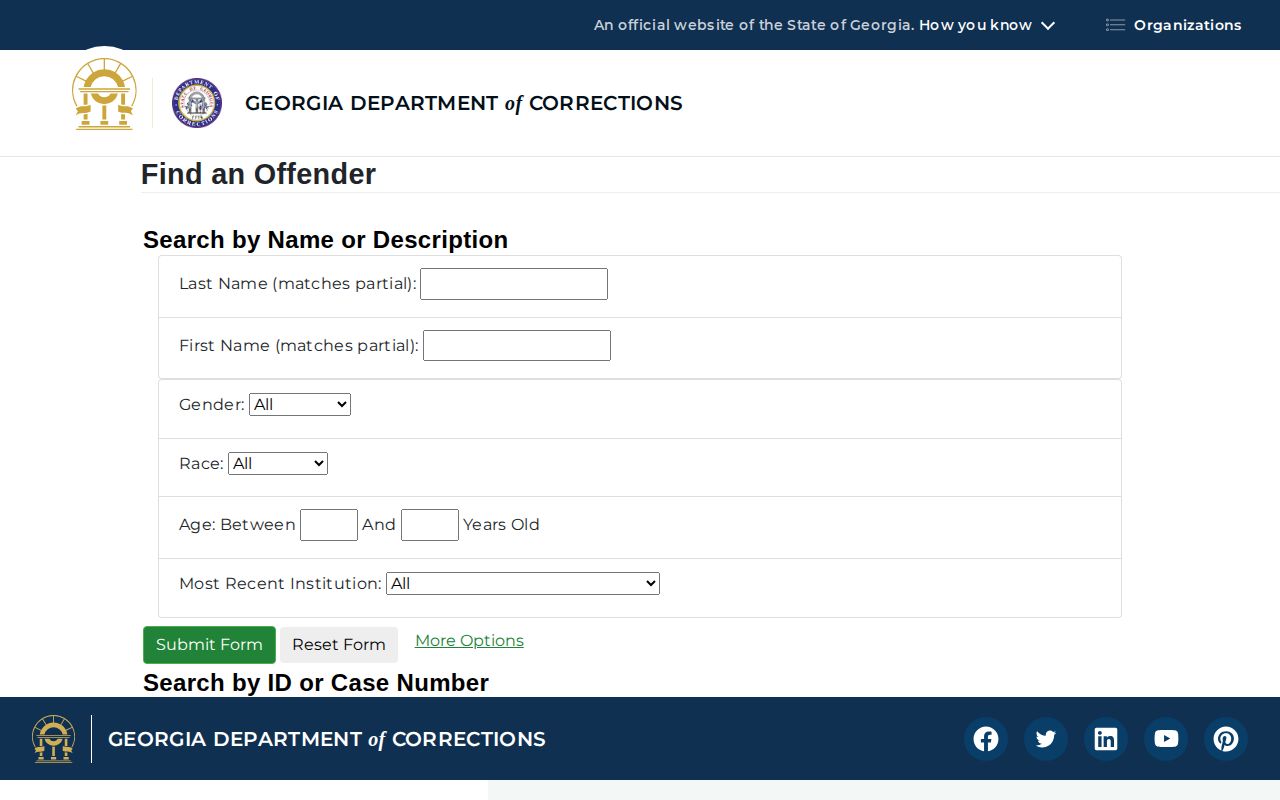
The active, inactive, release-window, institution, and identifier choices make this a state corrections lookup rather than a county jail release calculator.
Coweta Parole Month Is Not Release
The Georgia State Board of Pardons and Paroles uses the term Tentative Parole Month, or TPM. A TPM is not a final parole decision. It is the month when the Board expects to complete final review and, if appropriate, set a parole release date. It can be conditioned on good conduct and successful completion of specified programs. Reports of misconduct usually lead to postponement or cancellation.
This distinction matters for Coweta County Correctional Institution because a state offender housed in Newnan can have several dates in view at once. The GDC record may refer to the maximum term. The TPM may show review timing. A final parole release date follows Board action. None should be substituted for the actual date on which custody transfers or ends.
The public Board meeting calendar does not provide individual release hearings. Board notices state that public meetings concern policy and operations, not offender cases or parole decisions. For one person, use the TPM application before release and the parolee database after release.
Coweta State Release Credits and Law
Georgia's Performance Incentive Credit program can affect the length of stay for eligible GDC offenders. GDC describes PIC as an opportunity to reduce time in prison through satisfactory progress in cognitive-behavioral programs, education, vocational work, treatment, work assignments, and good behavior. PIC is not automatic good time for every prisoner, and it does not guarantee release on a date seen earlier in the sentence.
Parole eligibility is also different from release. Under O.C.G.A. § 42-9-45, a felony prisoner is generally eligible for consideration after nine months or one-third of the sentence, whichever is greater, subject to statutory exceptions. Aggregated sentences of at least 21 years have separate general eligibility language. The Board may consider an eligible person without granting parole.
O.C.G.A. § 17-10-6.1 defines serious violent felonies and places mandatory minimum restrictions on those sentences. Those rules can limit parole, suspension, probation, or sentence reduction for mandatory portions. Georgia's sources do not support a loose claim that every prisoner serves 85 percent. The defensible approach is to read the specific sentence, offense statute, applicable mandatory minimum, GDC record, and Board status.
Why Coweta Release Dates Change
A date can move because the legal order, custody status, or public system changed. Some changes affect the sentence calculation. Others delay physical release even though one agency has completed its work. The source record should show which system owns the next step.
| Factor | Effect on timing | Where to verify |
|---|---|---|
| Bond posted or revoked | Creates or removes a local pretrial release path | Coweta court and Sheriff |
| Court order or sentence change | May alter custody, probation, or credit | Sentencing court record |
| Detainer or hold | Can prevent community release or cause transfer | Holding agency and receiving agency |
| PIC decision | May change an eligible state offender's length of stay | GDC |
| TPM action or misconduct | May set, postpone, cancel, or rescind parole timing | Parole board |
| System update lag | The public label may trail the custody event | Jail, GDC, or official record |
| Transfer | Ends one custody event but starts another | Both sending and receiving systems |
Coweta Jail Release Timing Limits
No official Coweta County Jail good-time policy or published local release-date formula was found in the project research. The P2C settings allow an expected-release label, but the public configuration does not display detailed release date-time history or release reason. No public policy explains when staff populate that field. It would therefore be inaccurate to calculate a local jail date from a generic credit rule.
For a local sentence, relevant factors can include the court sentence, booking time, jail credit, holds, and processing. For pretrial custody, bond and court orders are central. The Coweta State Court docket may show a bond order, sentence, probation, dismissal, revocation, or completion, but felony cases must be routed to the proper Superior Court clerk instead of State Court. The jail or court should confirm the governing order and release event.
Coweta Release Date Channel Sweep
A complete Coweta County check does not stop after one portal returns no result. Each channel answers a narrow question. The Sheriff's P2C catalog covers a current or still-visible local booking. The county's online records request can retrieve a booking and release record after that entry drops from view. Coweta court dockets preserve orders and disposition. GDC covers Georgia correctional sentences, while the Board and DCS cover parole timing and community supervision.
Federal custody requires a separate branch. BOP says its locator covers federal inmates from 1982 to the present and warns that dates may change through First Step Act recalculation. When BOP displays a past date with no facility, it says the person was released from BOP on that date, though another system or supervised release may still apply. A person held pretrial for the U.S. Marshals Service may not yet appear in BOP. If Coweta local release means transfer to immigration custody, ICE ODLS becomes the custody-status tool rather than a county release record.
Georgia VINE can provide custody-change alerts for a specific indexed person, but it is not a certified release record and may lag. The practical sequence is to use the channel that matches custody, compare the date with the court or sentence record, and verify the completed event with the agency that created it.
Confirm a Coweta County Release Date
For a local release that no longer appears online, Coweta County Sheriff's records page says all Sheriff records requests should be submitted online. A narrow request can identify the person, approximate booking date, booking agency, case or charge, and the requested release date, release disposition, booking sheet, or transfer destination if public. The formal record can answer questions that the P2C public settings leave hidden.
For a state record, GDC tells users to verify offender-search information through written correspondence with Inmate Records and Information at P.O. Box 1529, Forsyth, GA 31029. For an alert while the person is still held, the Coweta VINE inmate check guide explains the notification path. An alert should still be matched to the jail, GDC, parole board, court, BOP, or ICE record because “release” can mean transfer out of only one system.
Court records can supply stronger proof of the order behind a date. Coweta State Court lists criminal docket access and copy options, including certified copies, while felony matters require the appropriate Superior Court route. A docket can show a bond order, sentence, probation term, revocation, dismissal, or completion even after the jail entry is no longer visible. The release record proves the custody event; the court record explains the legal action that caused or followed it.
Keep the date labels separate when recording a result: expected jail release, maximum prison term, parole eligibility, TPM, final parole date, transfer date, and actual release each describe a different stage. Note the agency and retrieval date, then ask that agency to correct or clarify a conflict. That method is more reliable than choosing whichever public date appears first.